Child argues with everything you say? How you can respond differently. Discover why kids argue and how to respond effectively. Learn simple strategies to help your child.
My friend was telling me about this incredibly frustrating morning she had with her 8-year-old.
She noticed a small tear in her child’s new book and just wanted to remind him to be careful with it.

Instead of a simple acknowledgment, he launched into a full-blown debate about whether the tear even existed.
“There’s no tear,” he insisted, even when she pointed it out. No matter how many times she showed him, he just wouldn’t admit it.
It’s not just the big things, either.
He would happily argue that the sky is not blue till the end of time.
He’s notorious for arguing over the smallest details—like insisting that “marmalade” isn’t a word even after she shows him the jar label.
It’s as if no matter what she says, his immediate response is to push back, turning every simple exchange into a full-blown debate.
And when he gets in trouble for his arguing, he cries, which only makes her feel awful because, of course, she loves him dearly.
If you’ve ever faced a similar situation, you know how draining it can be.
Constantly arguing with your child can take a real toll on your relationship and your patience.

Understanding why this happens and how to handle it can make all the difference.
Let’s dive into why kids argue so much and how you can respond in a way that helps break the cycle.
If you have a child who refuses to cooperate, you’ll want to check this out!
Your Child Argues With Everything You Say?
The Real Reason Kids Argue
At its core, an argument is just two people trying to prove each other wrong. Think about the last argument you had, chances are each side was determined to be right, which only fuelled the conflict further.
But for children, there’s often more at stake than winning the debate.
Understanding Why Your Child Argues Non-Stop
When kids argue, it’s often not about proving a point, but rather about meeting an unmet need.
As humans, we all have basic needs that drives our behaviour. If these needs aren’t met, children will try to fulfil them in any way they can.
If we don’t guide them to meet their needs in healthy ways, they resort to unhelpful ways to meet their needs.
When your child argues non-stop, they are usually trying to meet one of two needs: Connection or Power
If these needs aren’t fulfilled positively, children will find other ways to meet them.
Need for Connection.
- Feeling heard, understood and loved unconditionally
- A sense of belonging and being valued
- Emotional closeness with others
Need for Power.
- Control over their own life and choices
- The ability to make an impact on their world
- Feeling confident and capable
Why Your Child Argues
Arguing is a way to meet their needs for Connection or Power. It’s just not very effective or pleasant to deal with!
Our goal is to guide them toward more positive ways to fulfil these needs, helping them connect and assert themselves without conflict.

As parents, we all want to connect with our children, but sometimes, without realising it, our responses can make them feel unheard, increasing their need for connection and power.
Feeling unheard is a deep frustration for kids, often driving them to argue or act out in an attempt to be noticed or understood.
How We Unknowingly Respond That Makes Our Child Feel Unheard
It’s easy to fall into patterns that unintentionally make our children feel unheard. Here are a few common ways we might respond:
-
Dismissing their feelings: “You’re overreacting.”
-
Countering their argument immediately: “No, that’s not true.”
-
Redirecting too quickly: “Let’s not talk about that now.”
-
Using logic to shut them down: “That doesn’t make any sense.”
-
Brushing off their concerns: “It’s not a big deal.”
While these responses are often well-intentioned, they can make a child feel like their perspective doesn’t matter.
So, how can you respond in a way that makes your child feel heard while still holding firm boundaries?
Here’s a few examples:
The Power of Feeling HeardImagine your child is adamant that their bedtime is too early. Instead of launching into a lecture about the importance of sleep, you might say, “Ahh going to bed now sucks! You wish you could stay up later” You’re letting them know their wants matter, even if you still decide to keep bedtime the same. Or let’s say your child insists that their sibling got more ice cream. Instead of arguing and insisting they’re wrong, try acknowledging their perception: “It seems like things aren’t fair right now. Fairness is important to you!” This doesn’t mean you have to give them more ice cream, but it does show that you understand where they’re coming from. |

Responding to Get Your Child HeardInstead, try these approaches to help your child feel truly heard:
|
How to Empower Your Child While Maintaining Healthy Boundaries
Kids often argue to assert themselves and feel in control, believing that “winning” a fight proves their power. To channel this need positively, one effective approach is the Language of Listening CAN DO tool.
This method redefines boundaries by guiding children to find their own solutions within your limits.
It’s a win-win for parenting: they get to exercise their autonomy while still operating within the boundaries you set.
No threats, no bribes or consequences AND better behaviour. what’s not to love!
I delve deeper into this approach in my workbook, where I provide step-by-step strategies to help you implement the CAN DO tool effectively. For more insights on how to empower your child while maintaining clear boundaries, check out my workbook here.
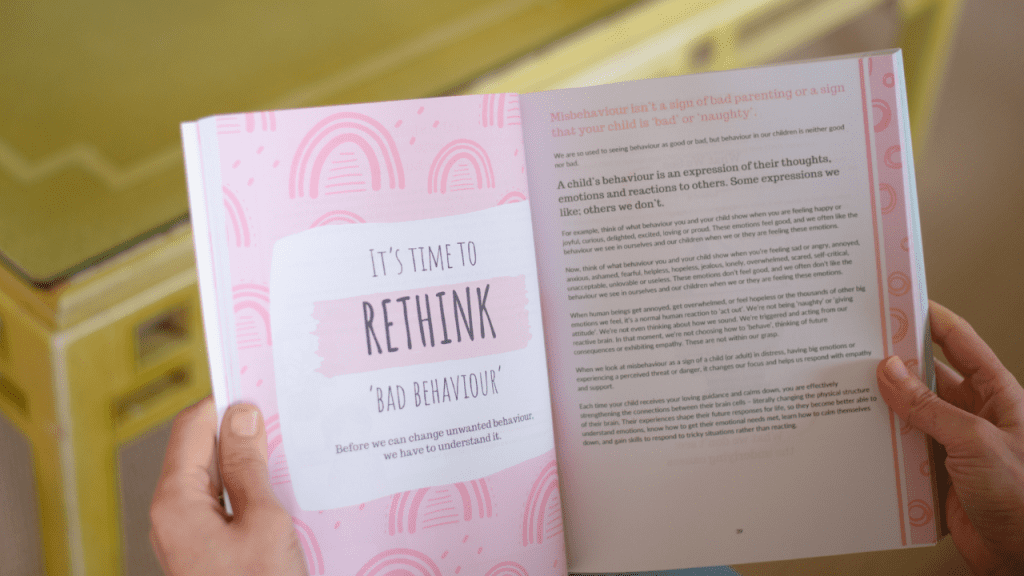
Stop Your Child Arguing
By shifting from a mindset of proving them wrong to one of understanding, you’ll not only reduce the frequency of arguments but also strengthen your relationship with your child.
They’ll feel heard, valued, and more willing to cooperate, knowing that their voice matters.
Next time you find yourself in the midst of a heated argument, remember: it’s less about the sky not being blue and more about your child meeting their needs in ineffective ways.
When we respond with empathy and understanding, we help our child meet their needs healthily, and their behaviour naturally improves.

At your wit’s end with your child’s behaviour and looking for something that really works? Want a simple, actionable plan that can start making a difference in just a few minutes a day?
The Language of Listening Collection, £15
Get immediate access to 3 eBooks with practical tools and step by step guidance to better behaviour and more joy at home
Page by page you’ll find easy and practical solutions to real life dilemmas faced by parents, just like you.
No punishments, bribes, or rewards needed—just happy kids and even happier parents!

Feeling overwhelmed with parenting challenges? Get online parenting support now.

I offer 1-2-1 coaching support to a more enjoyable, joyful family life.
You don’t have to go it alone! I’m here to help.
As a qualified, authorised child behaviour specialist and parenting coach, I provide personalised support and practical solutions to turn your parenting challenges into a calm, happy, peaceful home.
Parent coaching is like having a trusty guide on your parenting journey Let’s chat. You can schedule a complimentary, no-obligation call. You can do that by clicking right here.
What other parents are saying after working with me:
“Camilla was the answer to our prayers. I am endlessly grateful to her and only wish I’d found her sooner.” Louisa, Mum of 2
“Camilla coached us through different methods. Methods which I had never thought about, but gave us incredible results in a very short space of time, methods which we still use now and are so easy to implement on a daily basis. I am no longer the shouty mum I used to be. And my relationship with my kids has changed so much, I often wonder why I hadn’t started this journey sooner.’ Lucy, Mum of 3
“I was stuck in a pretty unpleasant vicious circle, with three awesome small children and was ruining it. I was afraid they would grow up and not trust me. Within the first couple of weeks working with Camilla I saw positive changes.” Claire, Mum of 3
Ready to take the first step toward the family life you’ve been dreaming of?